





Ships in Corsairs Legacy: Progression, Types, Characteristics and Boarding
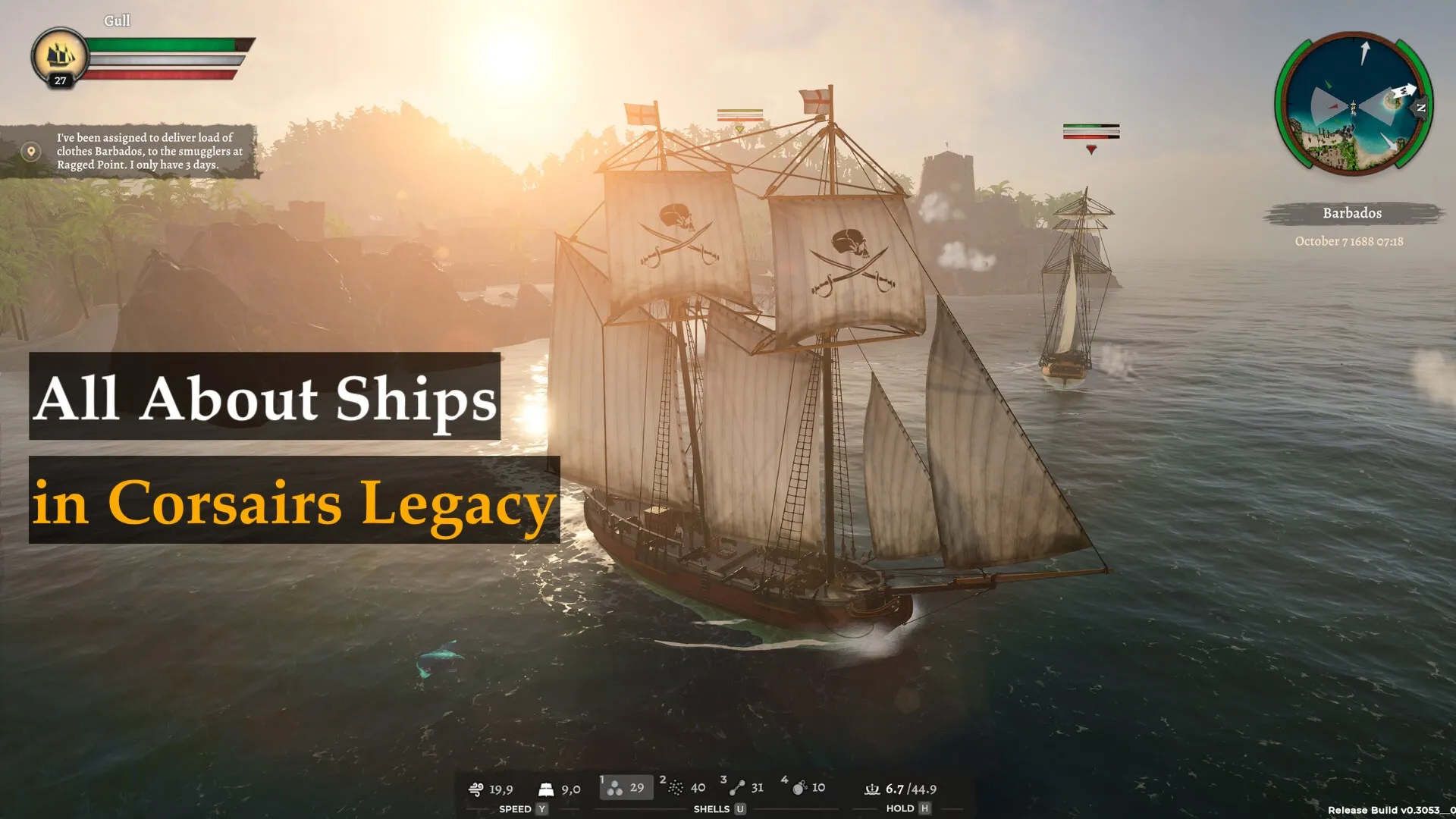
In Corsairs Legacy, the ship system is built as a hierarchical progression that combines ship type and subtype. Each subsequent ship type has higher base characteristics, which determines the difficulty of naval combat, boarding, and the level of NPC crew.
This article describes the ship structure in Corsairs Legacy and the principles behind how the fleet system works in the game.
This article covers:
- the full ship progression in the game (including designed but not yet added ships)
- base ship characteristics (guns, hull, crew)
- division of ships into merchant, common, and military subtypes
- the ship upgrade system
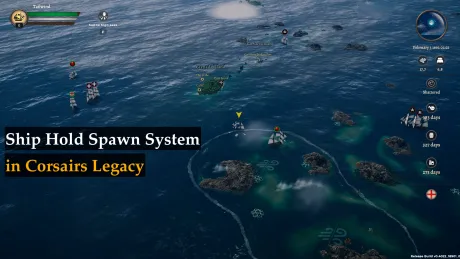
- ship spawn principles on the global map
- boarding mechanics and how difficulty depends on crew size
Overall Ship Progression in Corsairs Legacy
Cutter → Schooner → Galleon (not yet added) → Sloop → Snow → Pinnace → Brigantine → Brig → Corvette (not yet added) → Frigate (not yet added) → Lineship
This sequence reflects the complete progression logic already implemented in the game system. Ships currently not available in the game already have defined stat ranges and a place in balance, allowing them to be added in future updates without changing the core mechanics.
Ship Subtypes: Merchant / Common / Military
Each ship class has three subtypes:
- merchant — the largest cargo hold within its class
- common — balanced configuration
- military — the smallest cargo hold within its class, but with higher combat stats and a larger crew
Important: if you switch to a military subtype (even within the same ship type), boarding becomes harder — and this is reflected by the boarding difficulty indicator.
Ship Characteristics: Guns, Hull, Crew
Below are the characteristics of each ship type divided by subtype. All values are ranges that define generation/balance boundaries within the system.
Cutter
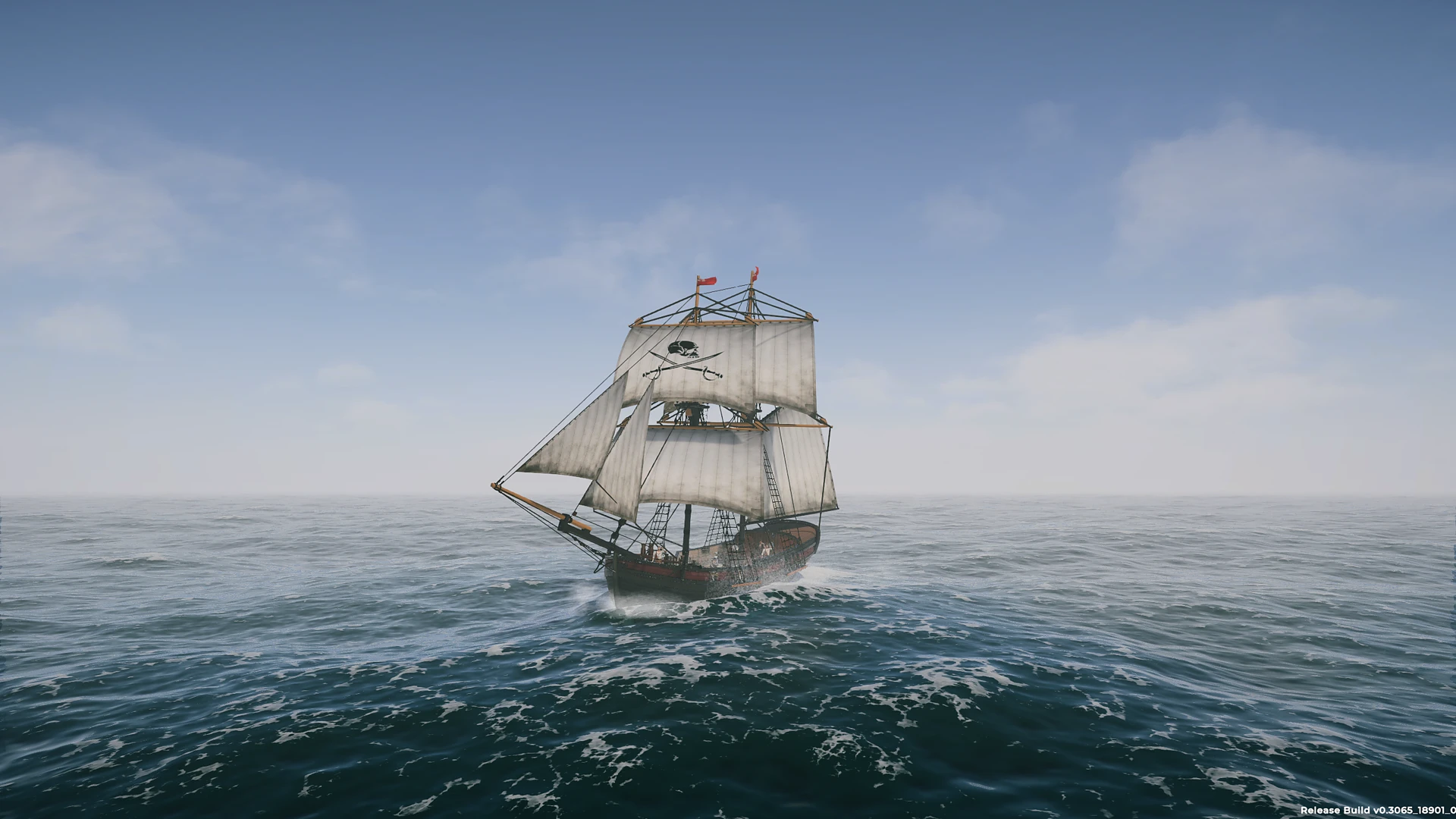
Class: 7
Guns: 8 × 6-pounder guns
Hull:
- merchant: 1000–1150
- common: 1150–1350
- military: 1350–1500
Crew:
- merchant: 15–17
- common: 18–21
- military: 22–24
Historical note: Cutters were historically used as small fast vessels for patrol, reconnaissance, message delivery, and escorting larger ships. Due to their compact size, they carried limited armament and a small crew.
Schooner
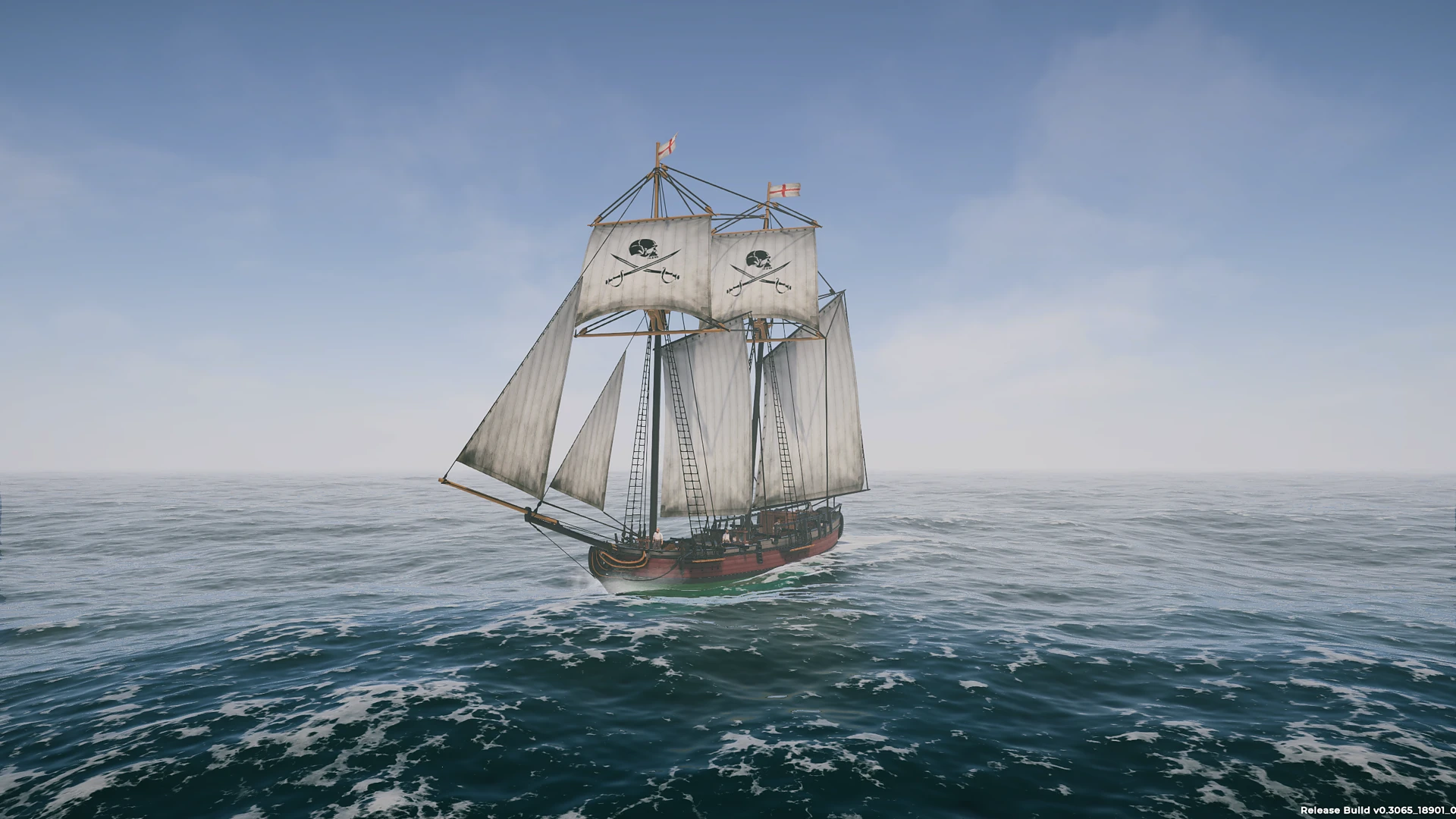
Class: 6
Guns: 10 × 6-pounder guns
Hull:
- merchant: 1500–1650
- common: 1650–1750
- military: 1750–1850
Crew:
- merchant: 25–27
- common: 28–30
- military: 31–33
Historical note: Schooners were widely used as merchant and auxiliary vessels thanks to their good maneuverability and efficient sail configuration. They were commonly employed in coastal trade, cargo transport, and port-to-port communication.
Galleon (not yet in game, but already integrated into the system)
Hull:
- merchant: 1850–2000
- common: 2000–2150
- military: 2150–2300
Crew:
- merchant: 34–36
- common: 37–39
- military: 40–42
Historical note: Galleons were large ocean-going vessels primarily used for long-distance cargo transport and armed escort of merchant fleets. They combined high cargo capacity with the ability to carry artillery.
Sloop
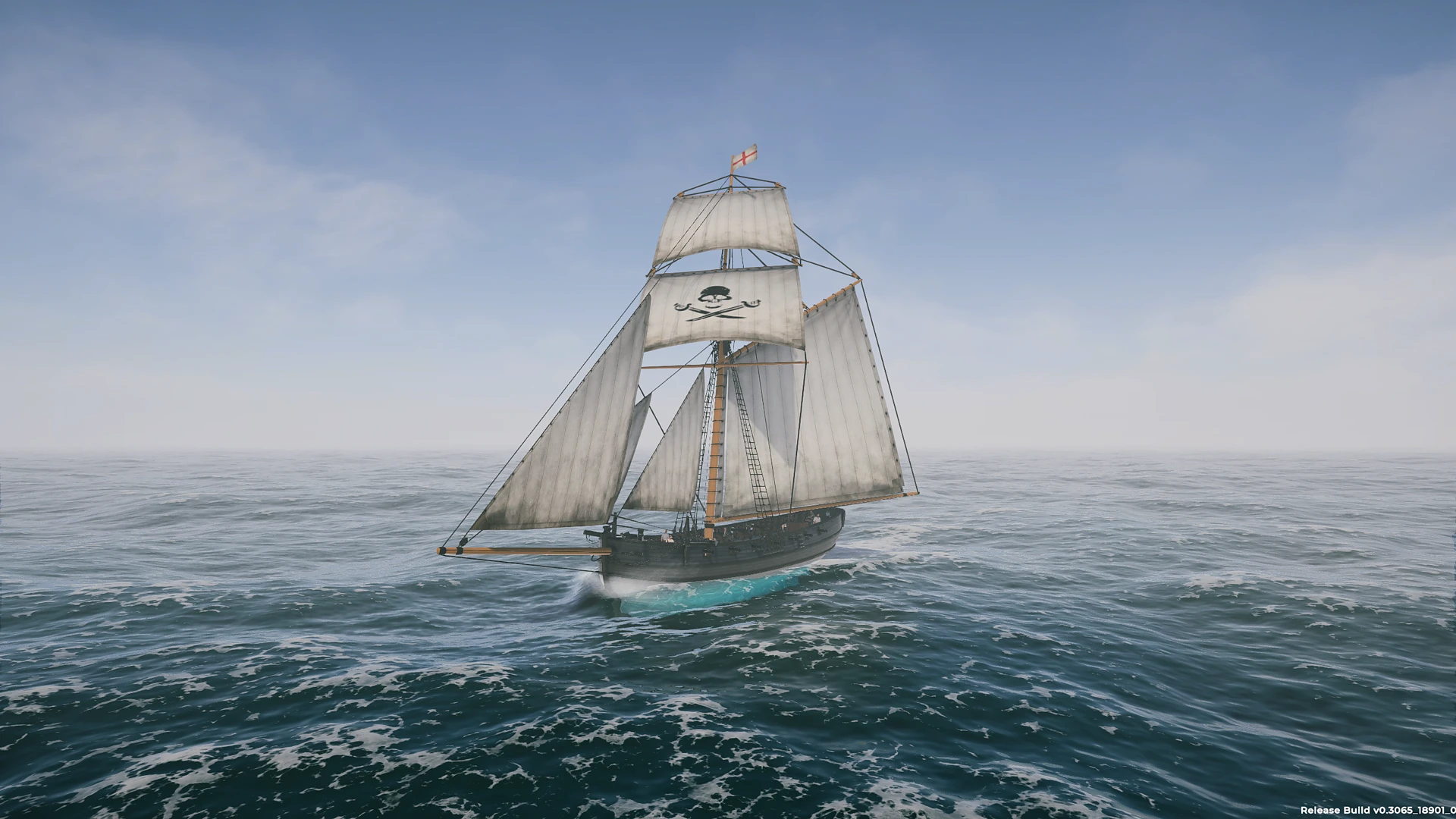
Class: 5
Guns: 14 × 6-pounder guns
Hull:
- merchant: 2300–2450
- common: 2450–2600
- military: 2600–2750
Crew:
- merchant: 43–45
- common: 46–48
- military: 49–51
Historical note: Sloops served as versatile vessels for military, trade, and reconnaissance tasks. They combined relatively small size with sufficient autonomy and maneuverability.
Snow
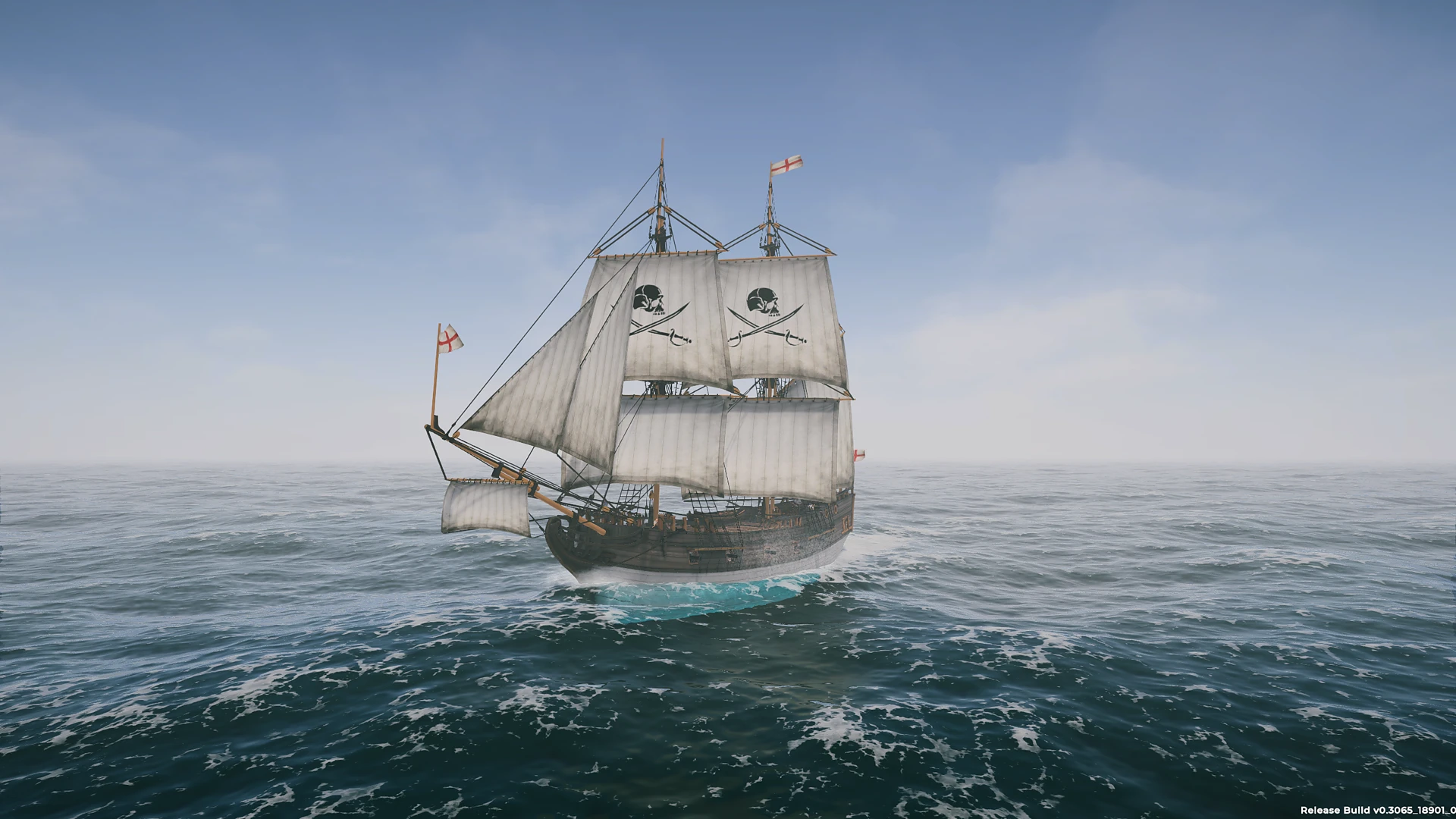
Class: 4
Guns: 10 × 9-pounder guns
Hull:
- merchant: 2750–2900
- common: 2900–3050
- military: 3050–3200
Crew:
- merchant: 52–54
- common: 55–57
- military: 58–60
Historical note: Snauws were used as military and auxiliary vessels, particularly for patrol, protection of trade routes, and service in European fleets. They typically carried larger crews than small merchant ships.
Pinnace
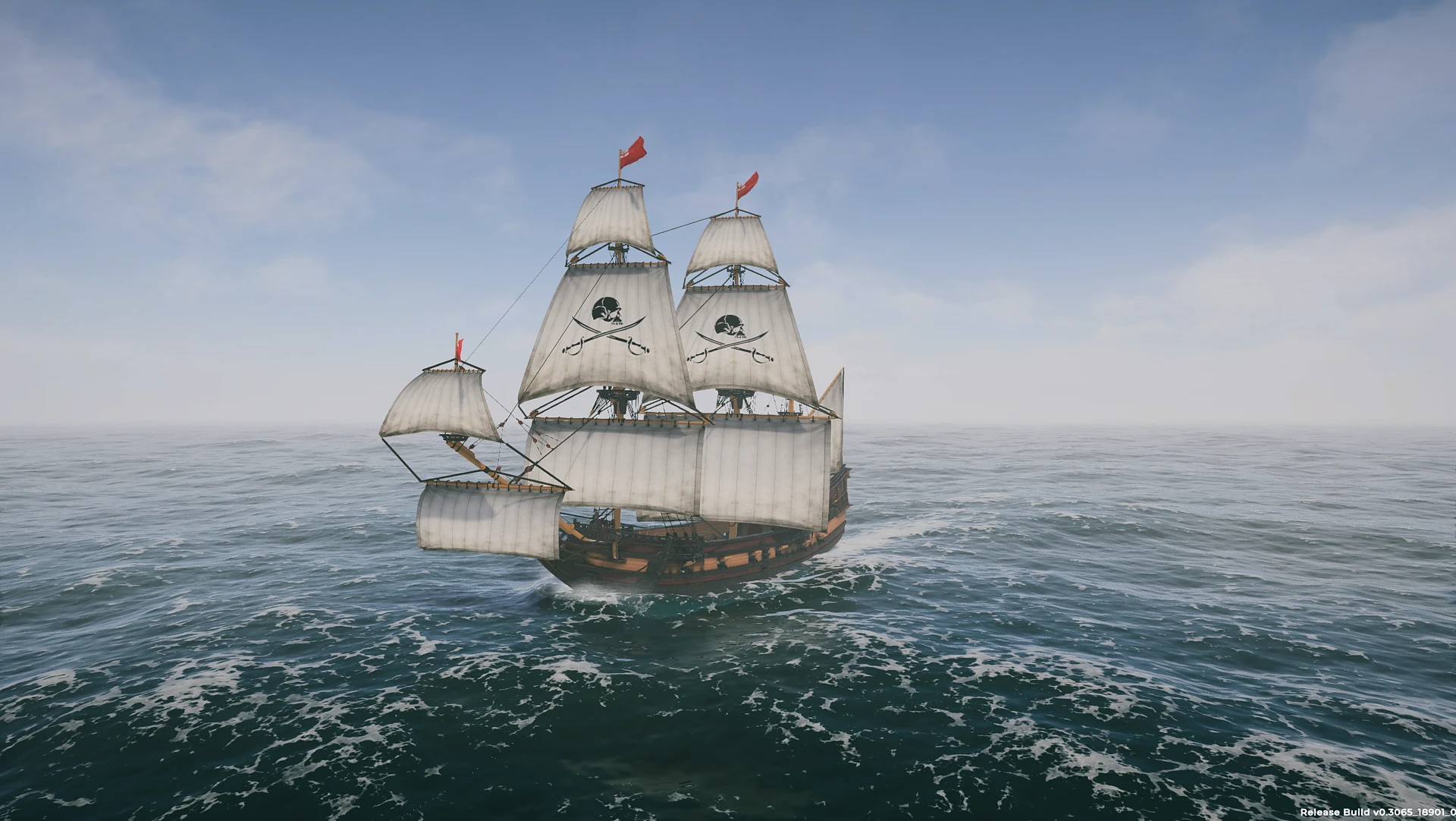
Class: 4
Guns: 18 × 6-pounder guns
Hull:
- merchant: 3200–3350
- common: 3350–3500
- military: 3500–3650
Crew:
- merchant: 61–63
- common: 64–66
- military: 67–69
Historical note: Pinnaces were fast auxiliary and reconnaissance vessels capable of carrying a relatively heavy armament for their size. They were often used for military purposes and convoy escort.
Brigantine
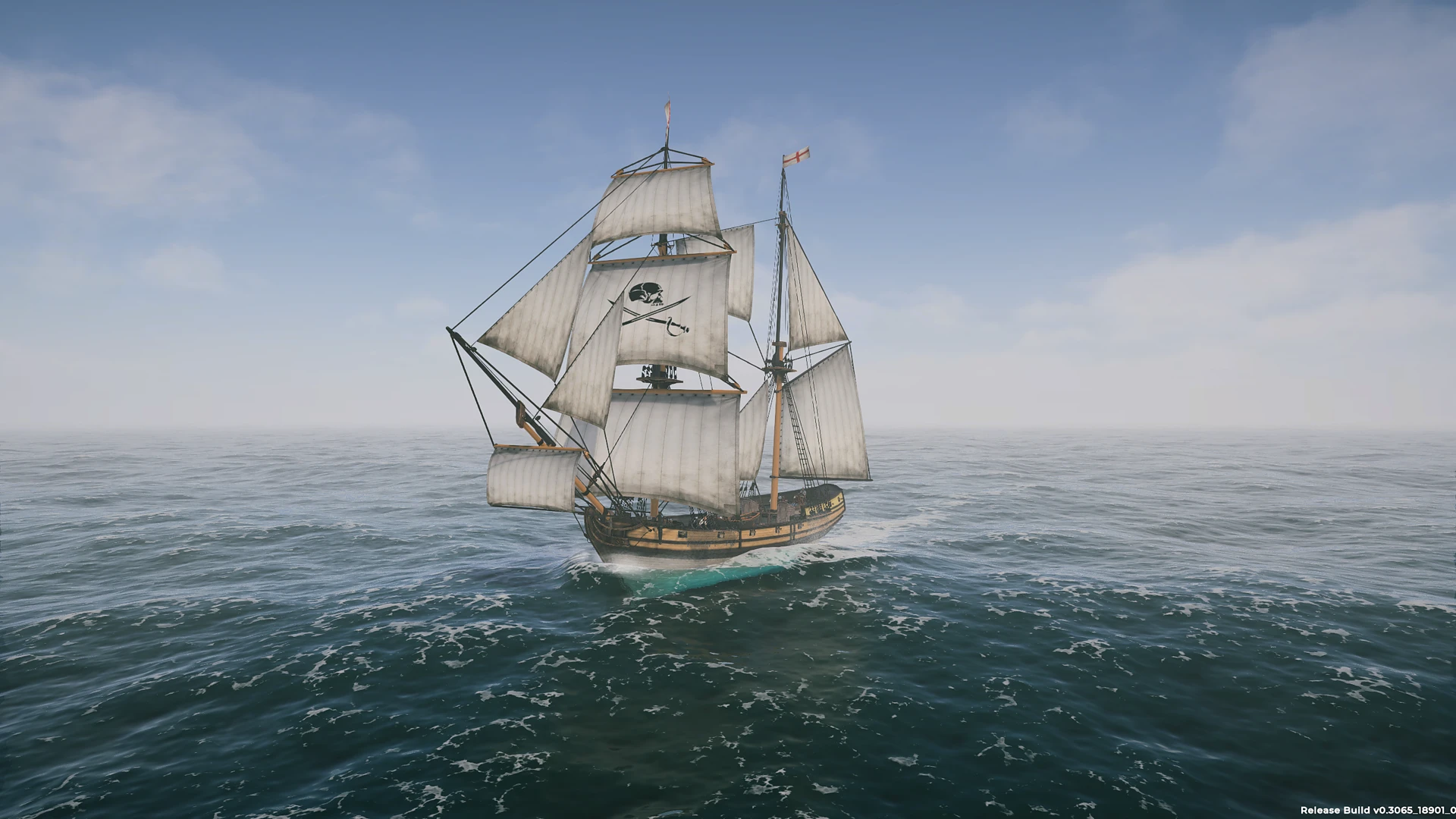
Class: 3
Guns: 16 × 9-pounder guns
Hull:
- merchant: 3650–3800
- common: 3800–3950
- military: 3950–4100
Crew:
- merchant: 70–72
- common: 73–75
- military: 76–78
Historical note: Brigantines were widely used as naval and privateer vessels. They combined good maneuverability with sufficient armament and crew size for boarding combat.
Brig
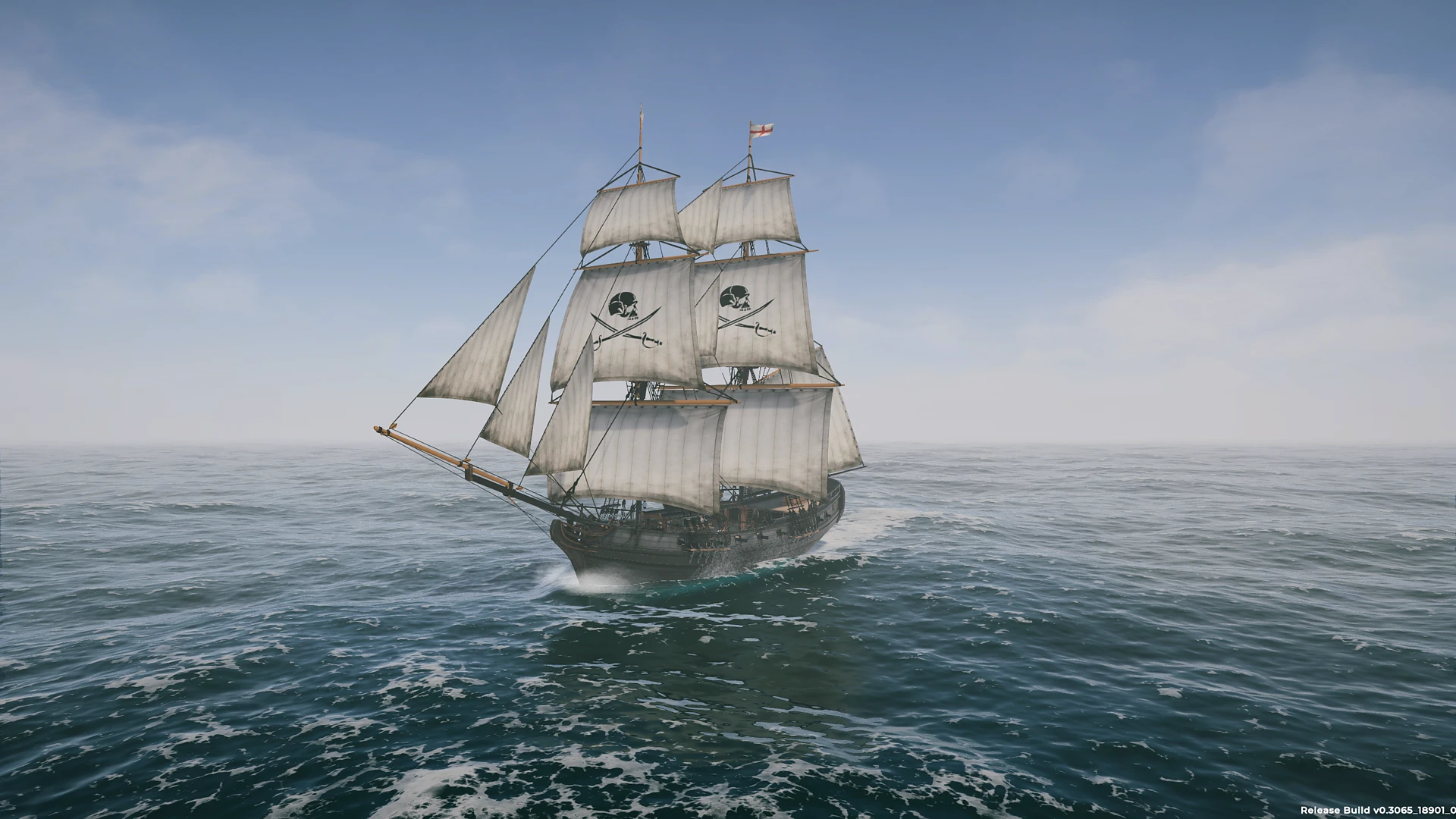
Class: 3
Guns: 16 × 9-pounder guns
Hull:
- merchant: 4100–4250
- common: 4250–4400
- military: 4400–4650
Crew:
- merchant: 79–81
- common: 82–84
- military: 85–87
Historical note: Brigs were common naval ships used for patrol, convoy escort, and participation in naval engagements. They carried substantial crews and artillery for their size.
Corvette (not yet in game, but already integrated into the system)
Hull:
- merchant: 4650–4800
- common: 4800–4950
- military: 4950–5100
Crew:
- merchant: 88–97
- common: 98–107
- military: 108–117
Historical note: Corvettes were fast warships used for reconnaissance, escort, and actions against merchant vessels. They occupied a middle ground between small combat ships and frigates.
Frigate (not yet in game, but already integrated into the system)
Hull:
- merchant: 5100–5250
- common: 5250–5400
- military: 5400–5500
Crew:
- merchant: 118–127
- common: 128–137
- military: 138–147
Historical note: Frigates were full-scale warships used for long naval voyages, ocean patrol routes, and major sea engagements.
Lineship
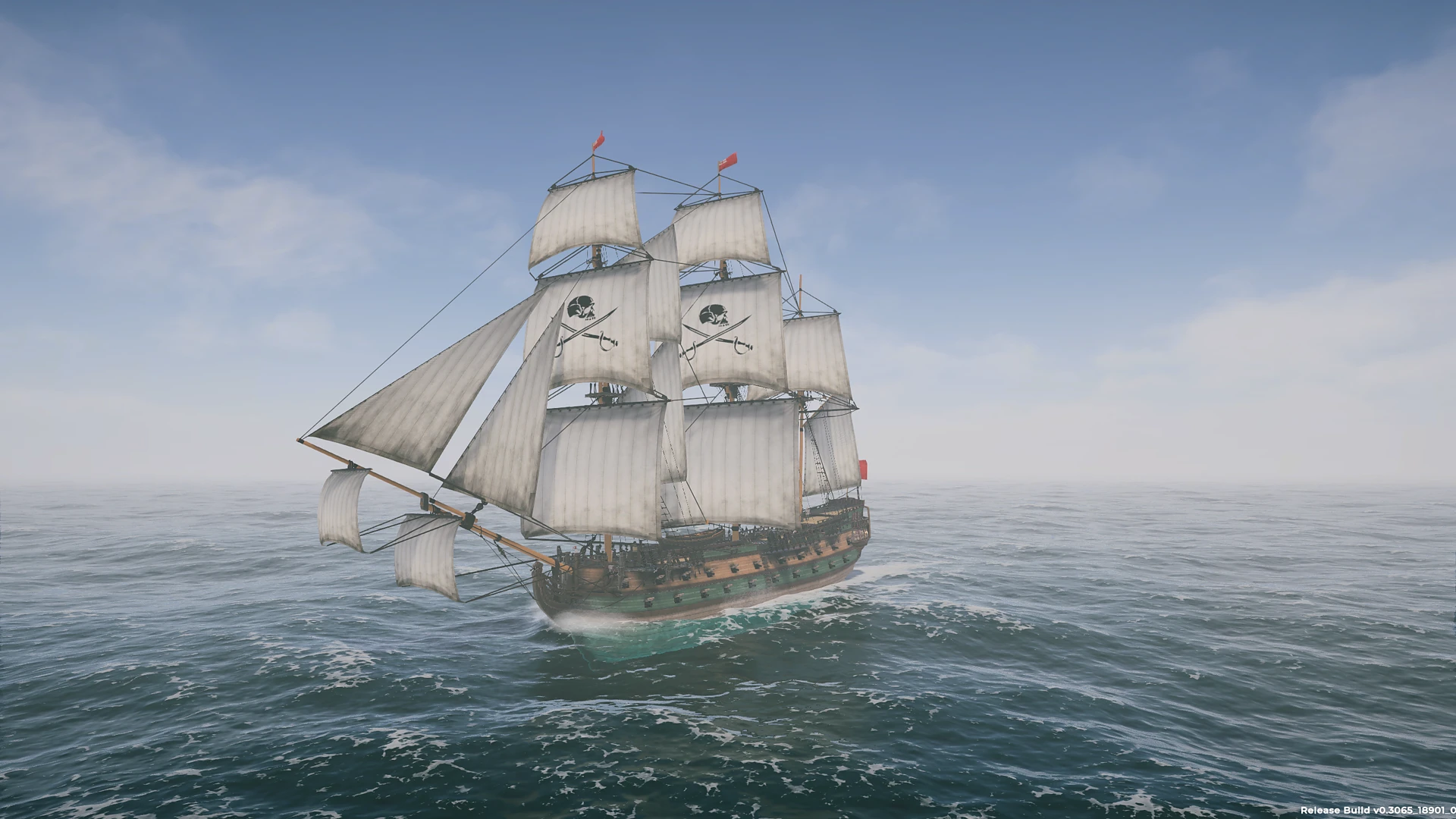
Class: 2
Guns: 52 × 12-pounder guns
Hull:
- merchant: 5500–5700
- common: 5700–5850
- military: 5850–6000
Crew:
- merchant: 148–157
- common: 158–167
- military: 168–177
Historical note: Lineships formed the backbone of battle fleets and were used in line-of-battle engagements. They carried the largest crews and the most powerful artillery armament.
Base Stats and the Ship Upgrade System
In Corsairs Legacy, each ship has a unique base set of characteristics and its own development potential. Even ships of the same type can differ significantly in combat depending on how upgraded they are.
The game has 5 ship elements that can be upgraded:
- crew
- cargo hold
- speed
- sails
- hull
Each of these elements has 5 upgrade levels that gradually improve ship characteristics.
Upgrade costs:
- 5000
- 7500
- 10000
- 12500
- 15000
Each level gives +3% of the current value.
For example:
- Level 1 → +3%
- Level 5 → about +15.9% total (due to multiplicative scaling)
There are also cosmetic ship upgrades. They affect only the appearance.
Base prices:
- Sail swap — 12,000
- Heraldry — 15,000
- Hull swap — 8,000
Ship upgrades can be done at shipyards (located in colonies) or at caravels (located in smuggler settlements).
How Upgrades Affect Progression
The key principle the system is built on: an unupgraded ship of the previous type always has lower hull and crew than a ship of the next type.
At the same time, a fully upgraded ship of the previous type can outperform an unupgraded ship of the next type in key stats — hull, survivability, and crew size.
This means that in Corsairs Legacy, progression is not reduced to a linear “just get a bigger ship”. The player always faces a choice: invest resources into upgrading the current ship or move to a new type without full preparation.
The Role of the Upgrade System in Overall Fleet Logic
As a result, the upgrade system creates a situation where a ship’s characteristics are determined not only by its type, but also by its development level. This leads to ships of the same type potentially differing significantly in combat parameters, and moving to the next type does not always mean an automatic increase in effectiveness without additional investment.
How Ship Spawns Work on the Global Map
The map is designed so the player always has a chance to “skip” progression — but with risk:
- 10–15% of ships spawn 1 step above your current type
- ≈5% of ships spawn 2 steps above
In addition to random encounters, there are:
- events
- military convoys where you can find specific ship types and subtypes
Over time, the plan is to increase the number of events so players can more often purposefully search for the ship they need, rather than relying only on random chance.
Different Ships = Different NPC Crew Levels
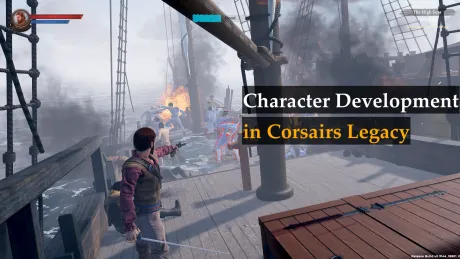
The key balance logic in Corsairs Legacy: the stronger an NPC ship is compared to the player’s ship, the higher the level of every NPC in the enemy crew.
In practice, this means:
- more HP for the enemy
- more damage per hit
- boarding becomes much more dangerous even with a similar number of people
Boarding: How to Capture a Ship 1–2 Types Higher
The core principle of boarding mechanics: the best way to capture a larger ship is to destroy its crew before initiating boarding. The primary way to reduce crew is by firing grapeshot.
It does not matter what ship type the enemy has: if the crew is nearly destroyed, the ship becomes capturable. In theory, even a cutter can capture a Lineship if the Lineship is left with a minimal crew.
Gun Placement Along the Ship’s Hull
In Corsairs Legacy, all ships have guns placed along the port and starboard sides.
Exceptions:
- Pinnace — has 2 additional guns at the stern
- Lineship — has 2 additional guns at the stern
Stern guns change:
- chasing
- escapes
- positional control in local combat
How to Identify a Ship’s Subtype Before Combat
There are three key ways:
- spyglass
- hull color (red — merchant, dark — military)
- heraldry (a shield indicates a warship)
Angle to the Wind: A Hidden Advantage of Different Ship Types
Each ship type has its own optimal angle to the wind at which it can sail faster than other ships. This can be used in local battles to:
- force a favorable distance
- escape a stronger enemy
- outplay the opponent with maneuvering rather than raw power
Overall Summary of the Ship System
The ship system in Corsairs Legacy is built so that choosing a ship type, its subtype, and upgrade level creates different development scenarios. Crew, cargo hold, and hull characteristics determine both economic capabilities and the difficulty of combat encounters, creating a multi-dimensional fleet progression model.
A new pirate game is now on Steam
Buy on



 BuySteam key18$25$
The game is already available on Steam