





How Tech-5 Implemented Dynamic Footprints in Corsairs Legacy Using HDRP VFX Graph

Small environmental interactions often have a surprisingly large impact on immersion. One of those details in Corsairs Legacy is dynamic footprints left by the player character while moving across terrain.
At first glance, footprints may look like a simple visual effect.
In reality, implementing them efficiently inside a large open-world RPG required solving several rendering and performance challenges.
The Goal
The objective was straightforward:
- create believable dynamic footprints
- make them react directly to player movement
- keep them visually integrated into terrain materials
- and avoid expensive CPU-side decal systems
At the same time, the solution had to remain scalable for large open environments and maintain stable performance.
Why We Limited the System to the Player
An obvious question appears immediately:
Why not enable footprints for every NPC?
The answer is performance.
Large cities and islands in Corsairs Legacy may contain dozens or even hundreds of active NPCs simultaneously.
If every character continuously generated:
- decals
- spawn events
- terrain interactions
- and GPU updates
the amount of visual data and synchronization would grow extremely quickly.
Instead, the team focused the system on the player character only, where the effect has the highest visual impact while remaining computationally reasonable.
This is one of those cases where selective realism produces a much better performance-to-visual-quality ratio.
Building the Footprint System
The implementation combined multiple tools and pipelines:
- Blender
- Substance Designer
- Unity HDRP
- HDRP VFX Graph
- GPU particle workflows
- Decal rendering
The process started in Blender, where the base footprint mesh was created from the player boot shape.
From this geometry, a height map was baked.
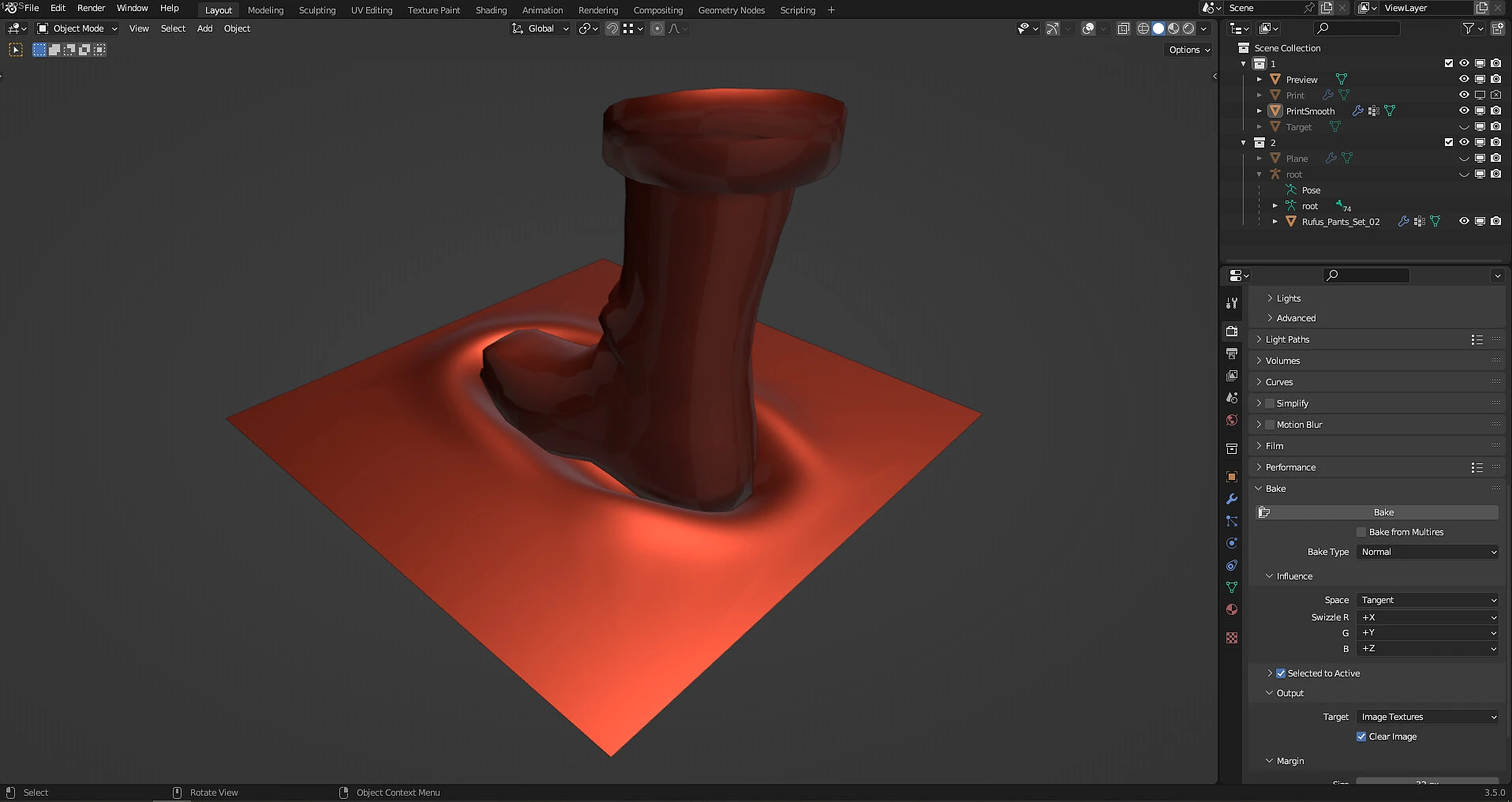
The baked data was then processed in Substance Designer to generate:
- Base Color textures
- Normal Maps
- Ambient Occlusion maps
- and additional surface detail information
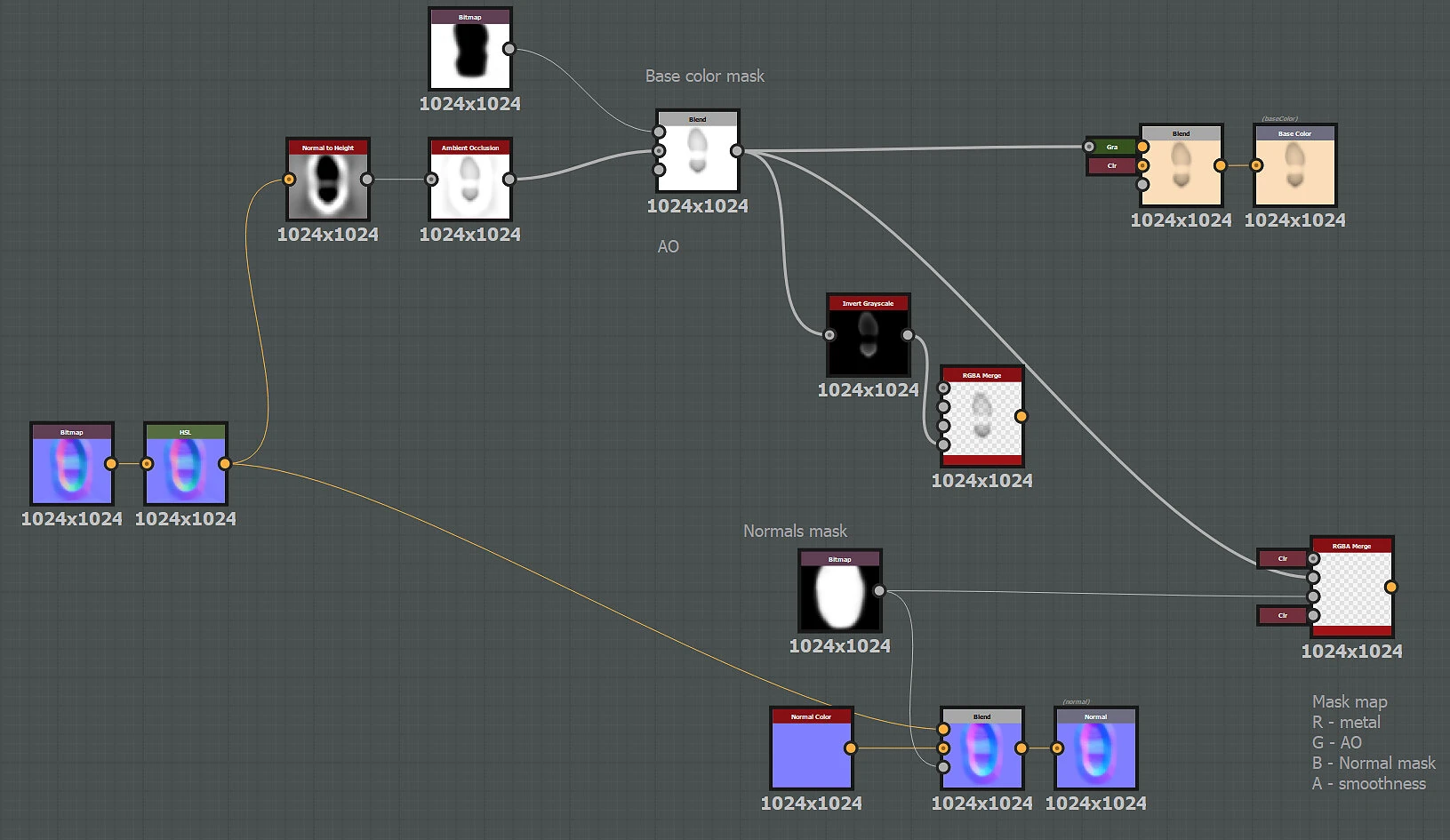
This allowed the footprints to blend naturally into terrain lighting and materials instead of appearing as flat overlays.
GPU-Based Footprints with VFX Graph
The core of the system uses:
HDRP VFX Graph with Lit Decal Output.
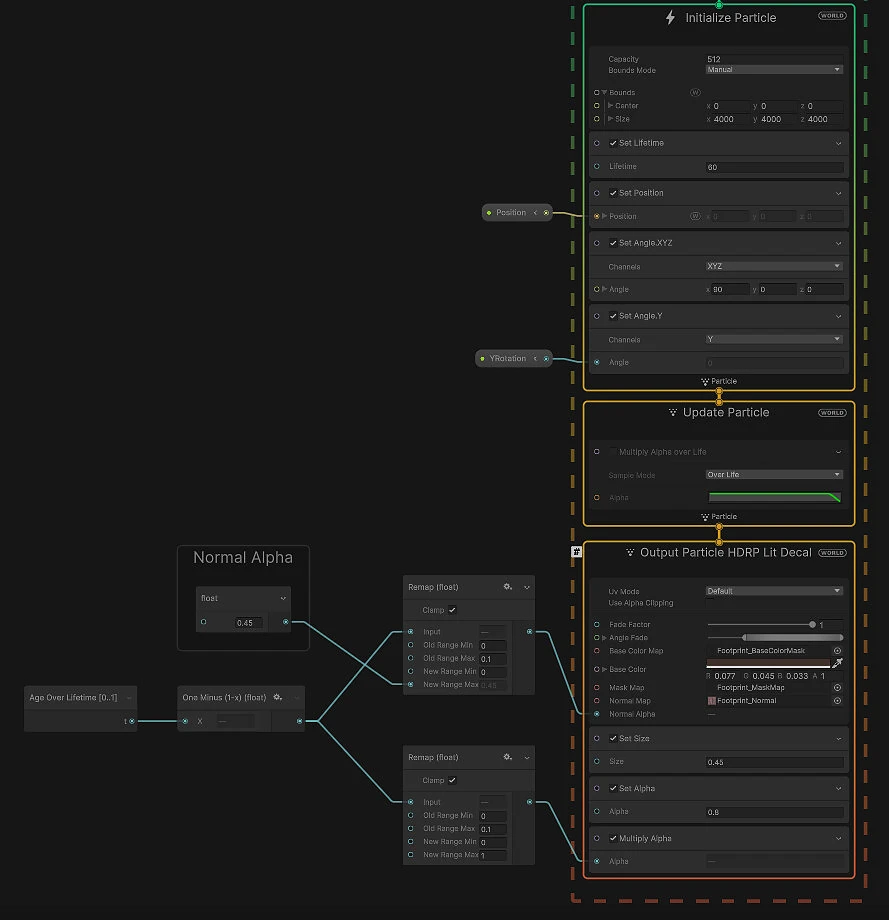
Instead of spawning traditional CPU-side decals, footprints are generated as GPU particles.
This is extremely important for performance.
GPU particles inside VFX Graph:
- do not exist as individual CPU gameplay objects
- avoid expensive scene management overhead
- and scale dramatically better under load
In practice, this means the system can generate large numbers of footprints without creating the same CPU bottlenecks as classic decal approaches.
Animation-Driven Spawn Events
Another important detail is timing accuracy.
Footprints are not spawned continuously while moving.
Instead, the system uses animation events directly inside the running animations.
When the foot touches the ground:
- the animation triggers an event
- a script captures the exact foot world-space coordinates
- and sends a spawn event directly into the VFX Graph system
This ensures:
- correct synchronization
- believable placement
- and natural footprint spacing based on the real animation cycle
The result feels much more grounded than simply spawning effects based on movement speed alone.
Why Small Details Matter
Footprints are a relatively subtle effect.
Many players may not consciously notice them.
But these kinds of environmental interactions significantly improve:
- movement feedback
- surface readability
- environmental grounding
- and overall immersion
Combined with terrain microdetails, lighting, weather, and animation systems, they help make the world of Corsairs Legacy feel more physically connected and believable.
And because the system is GPU-driven and selectively applied only where it matters most, it achieves this without heavily impacting performance, even inside large open-world environments.

A new pirate game is now on Steam
Buy on







 BuySteam key18$25$
The game is already available on Steam