





How Tech-5 Added Microdetails to Corsairs Legacy Islands
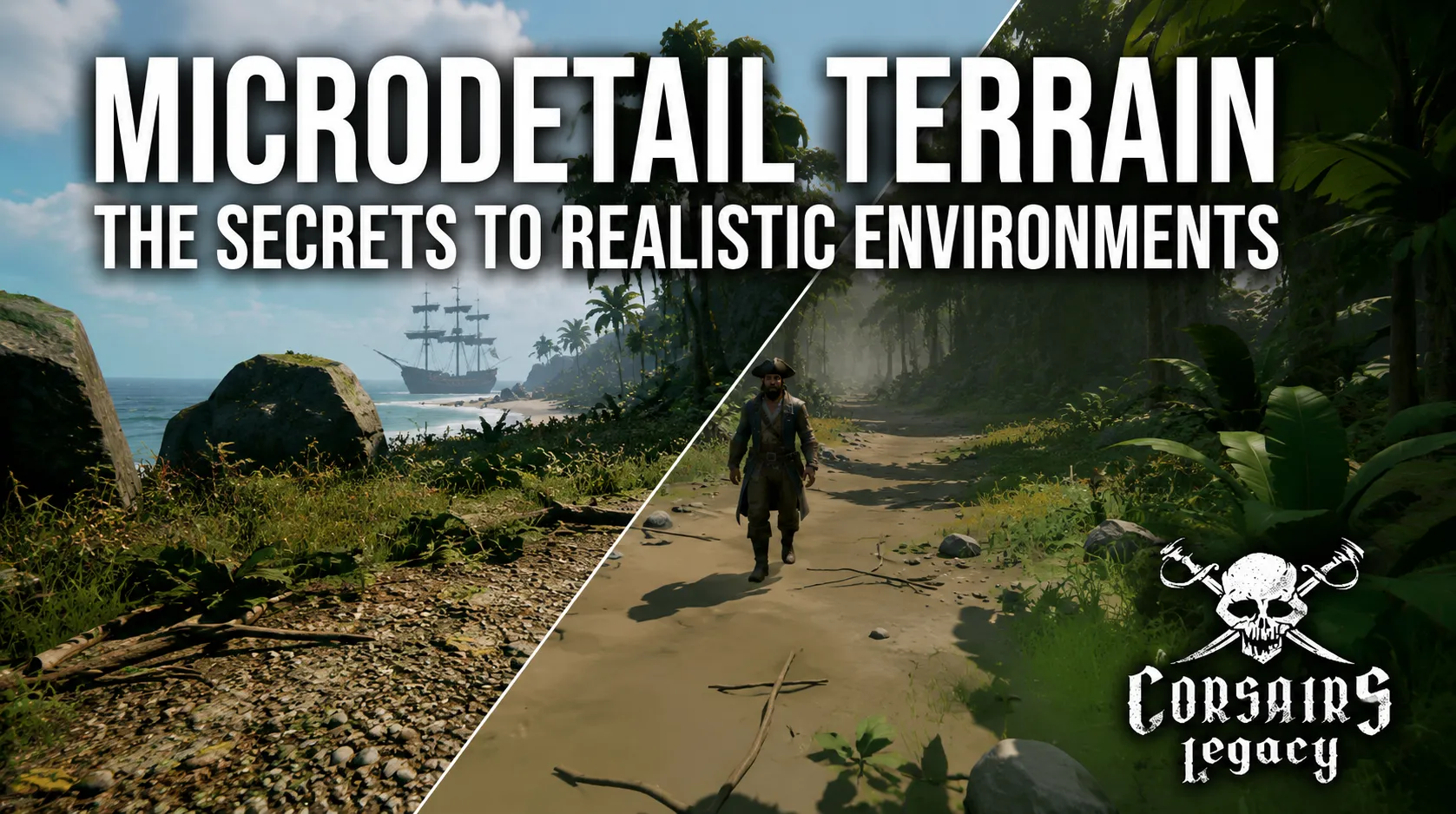
When players talk about “next-gen graphics,” they usually think about large things:
- global illumination
- volumetric clouds
- high-resolution textures
- cinematic lighting
But in practice, what often makes a game world feel believable are the tiny details.
- Small rocks near roads.
- Broken branches in forests.
- Leaves near walls.
- Grass variations along paths.
- Tiny imperfections in the terrain.
These microdetails are what make environments stop looking like “game levels” and start feeling like real places.
For Tech-5 UG, improving environmental realism in Corsairs Legacy became one of the important visual tasks during development.
The Problem with Large Open Worlds
Corsairs Legacy contains large tropical islands, ports, jungles, beaches, and cities.
The challenge with open-world environments is repetition.
Even with high-quality terrain textures, players subconsciously notice when:
- the ground looks too clean
- terrain transitions are too smooth
- forests lack small clutter
- or surfaces repeat too evenly
Traditionally, solving this requires manually placing thousands of small props:
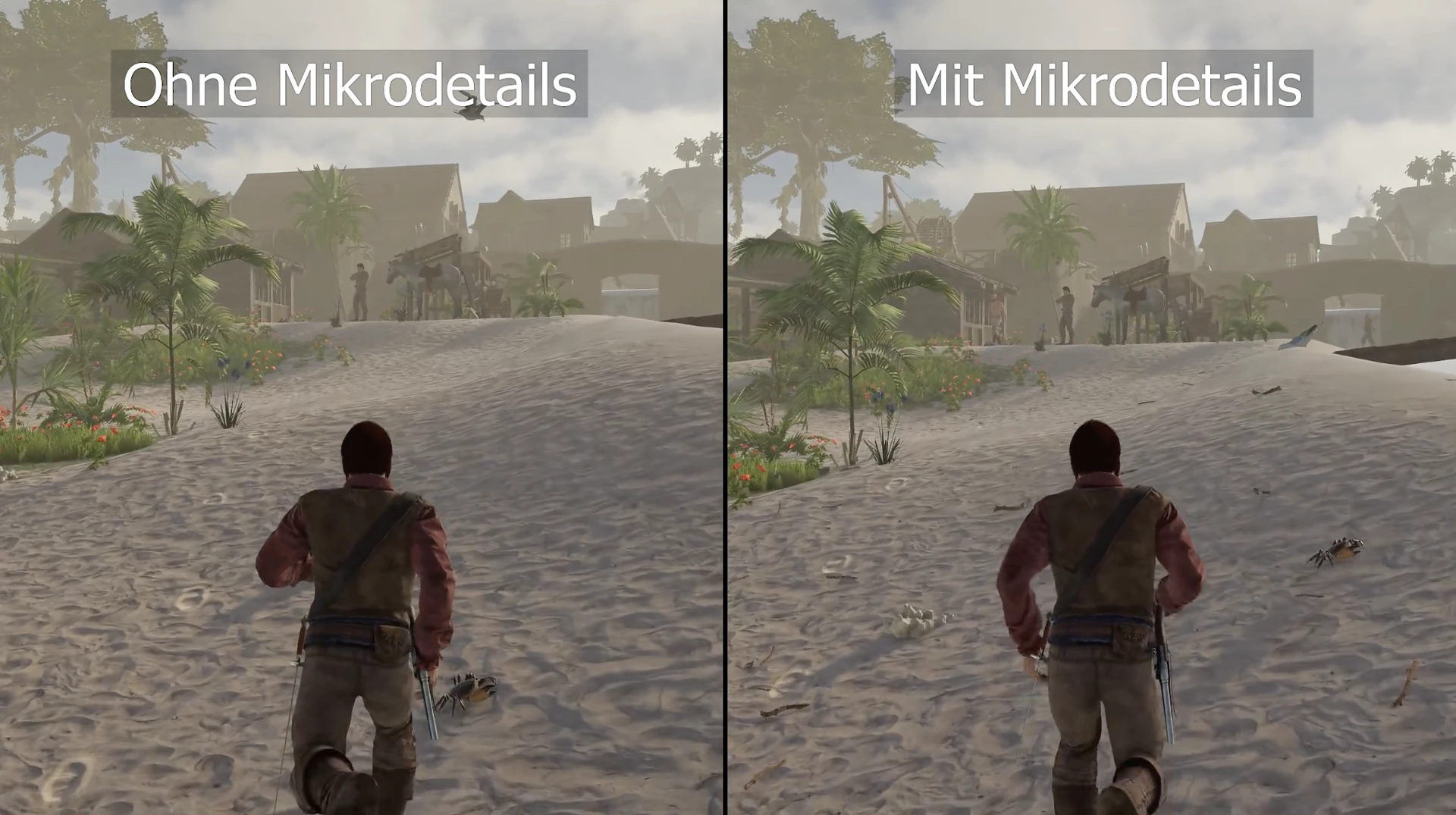
- stones
- sticks
- foliage
- leaves
- debris
- grass clusters
But this quickly becomes:
- difficult to maintain
- expensive for performance
- and extremely time-consuming for level artists
Searching for a Better Solution
To solve this problem, the team integrated the Microdetail Terrain System for Unity.
The asset uses Signed Distance Fields (SDF) to procedurally distribute highly detailed terrain micro-elements such as rocks, sticks, grass, leaves, and small debris.
What made the system especially interesting was:
- procedural generation
- randomized variation
- density control
- painting tools
- and significantly higher visual fidelity compared to classic terrain detail placement
Instead of manually placing every tiny object, the system allows environments to generate believable microvariation automatically.
Working Directly with the Plugin Developer
During integration, the Tech-5 team directly contacted the plugin developer and collaborated on adjustments for Corsairs Legacy’s specific environment requirements.
This became especially important because Corsairs Legacy combines:
- large tropical landscapes
- dense vegetation
- coastline transitions
- dynamic lighting
- and wide open exploration areas
The team needed the system to work naturally with the project’s rendering setup and terrain workflow.
After additional tuning and modifications, the islands immediately started feeling more organic and visually rich.
Why Microdetails Matter So Much
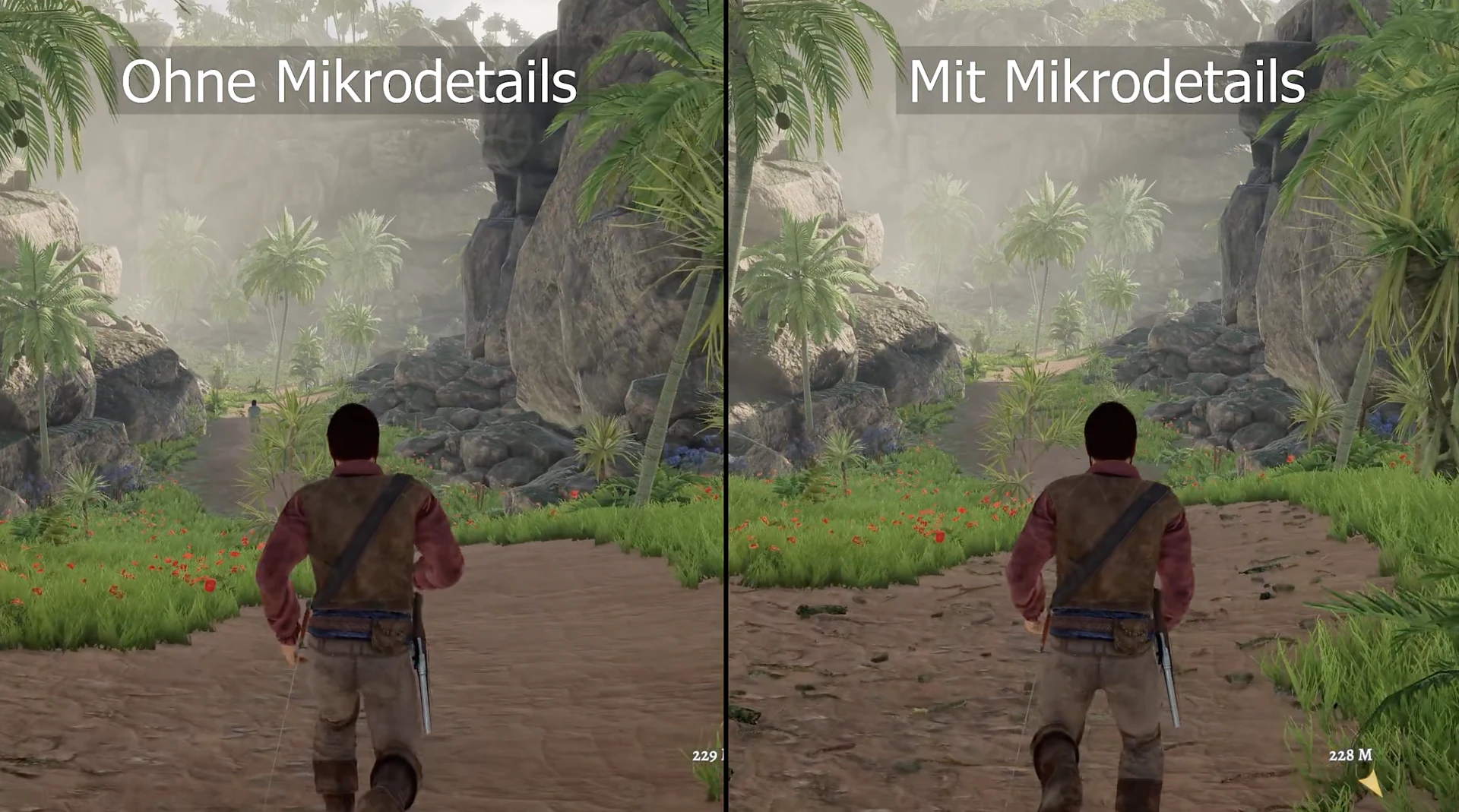
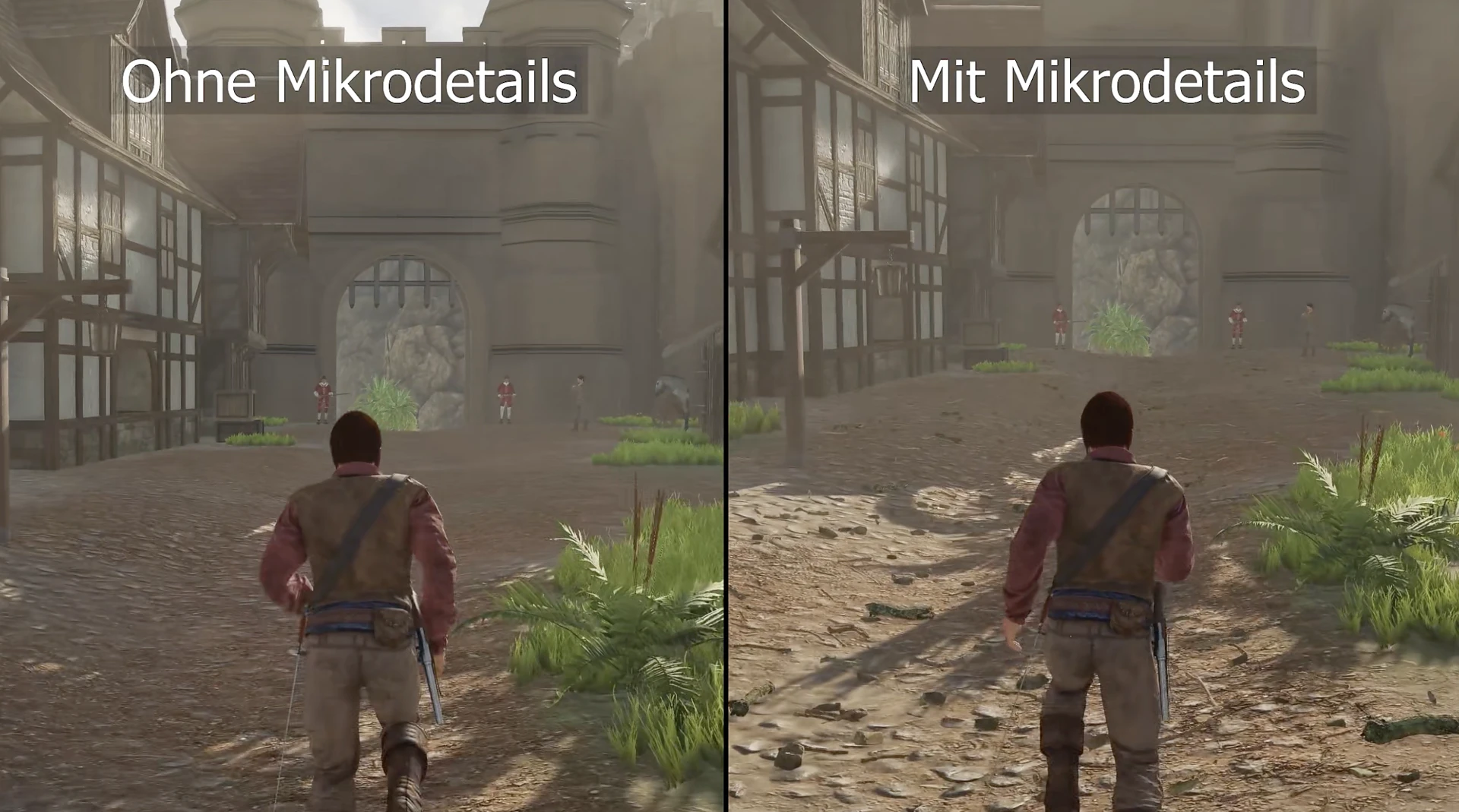
One of the most interesting discoveries during development was how strongly microdetails affect perceived realism.
Even when players do not consciously notice:
- tiny rocks
- grass variations
- broken sticks
- or leaf clutter
their brain still interprets the environment as significantly more believable.
This is especially noticeable while moving through the world.
The terrain gains:
- visual depth
- texture variation
- lighting complexity
- and a more natural silhouette
Without microdetails, terrain often appears “flat” or artificially clean.
With them, the environment immediately feels more cinematic and grounded.
Performance Considerations
One important reason the team liked the system was performance efficiency.
The asset is specifically designed to provide significantly more detail than traditional high-poly mesh placement while remaining optimized for modern rendering pipelines.
According to the asset documentation, the system supports both HDRP and URP pipelines and uses GPU-driven workflows with compute shader support for high-density rendering.
For open-world environments, this is critical.
Simply scattering thousands of classic meshes across large islands would quickly become too expensive for rendering and memory usage.
The microdetail approach allowed the team to increase visual richness without overwhelming the scene with traditional geometry.
Why We Recommend the Asset
The Tech-5 team had a very positive experience with the Microdetail Terrain System overall.
What stood out most:
- visual quality
- flexibility
- procedural workflow
- and the responsiveness of the developer
The system is especially useful for developers building:
- open worlds
- forests
- natural environments
- RPGs
- exploration games
- or realistic landscapes inside Unity
For teams trying to push environmental realism further without manually decorating every square meter of terrain, it is a genuinely valuable tool. Microdetail Terrain System on Unity Asset Store

A new pirate game is now on Steam
Buy on







 BuySteam key18$25$
The game is already available on Steam